

The Importance Of Two Treatment Methods When Tin Ore Flotation

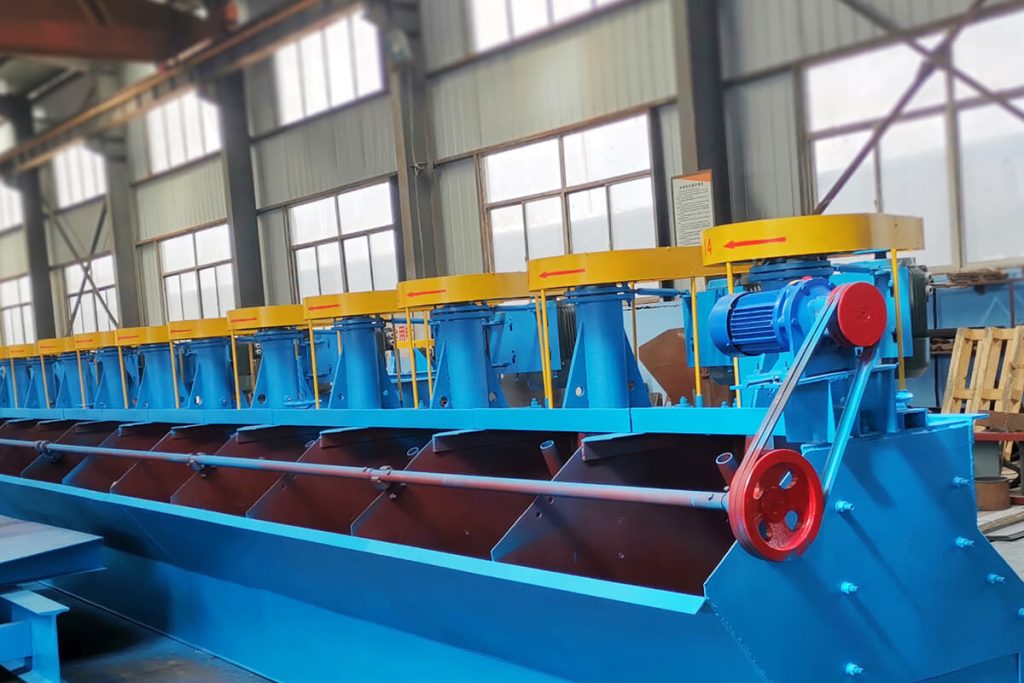
(1). Grinding
It involves reducing the size of tin ore particles. It is usually accomplished through crushing and grinding stages using various types of equipment, such as jaw crushers and ball mills. The purpose is to obtain a suitable particle size range for effective separation during flotation.
(2). Grading
This operation determines the size of the particles that will undergo flotation and the size that will be discarded as waste. By properly sorting the particle size, maximum recovery of tin ore can be more easily achieved without excessive energy consumption or reagent usage. The well-graded feed allows for better control of froth stability during flotation, which is critical for separating valuable tin minerals from gangue material.
(3). Desulfurization
Desulfurization treatment is a vital pretreatment operation before tin ore flotation. Its purpose is to remove sulfur compounds from the ore, which interfere with the flotation process and reduce the overall recovery of valuable minerals.
Desulfurization methods primarily involve leaching, where a chemical solution is added to dissolve sulfur compounds in the ore particles. This technology has advantages over roasting because it operates at lower temperatures and reduces environmental pollution caused by gas emissions.
Whether by roasting or leaching methods, removing these compounds ensures higher recovery of valuable minerals while mitigating the environmental impacts of excess gas emissions or chemical use.
(4). Iron removal
A common problem that needs to be solved in tin ore flotation is the presence of iron particles, which can significantly affect the efficiency and effectiveness of flotation.
To successfully remove iron from tin ore, various techniques can be employed. One widely used method involves magnetic separation, in which magnets attract iron particles and separate them from the ore. Another method is gravity separation, which uses the density difference between iron and tin to separate them. Additionally, chemical methods such as baking or leaching can dissolve iron or convert it into a more soluble form for easier removal.
Additionally, minimizing the presence of iron increases production efficiency and improves downstream processing, such as smelting or refining.
(5). Adjustment
Chemical substances called reagents are added to the ground tin slurry. These reagents play a vital role in changing the surface properties of the minerals in the slurry, making them more susceptible to air bubbles adhering to during the flotation process. This step typically involves adjusting the pH and adding collectors and frothers, which help promote selective flotation by enhancing particle-bubble interaction.